
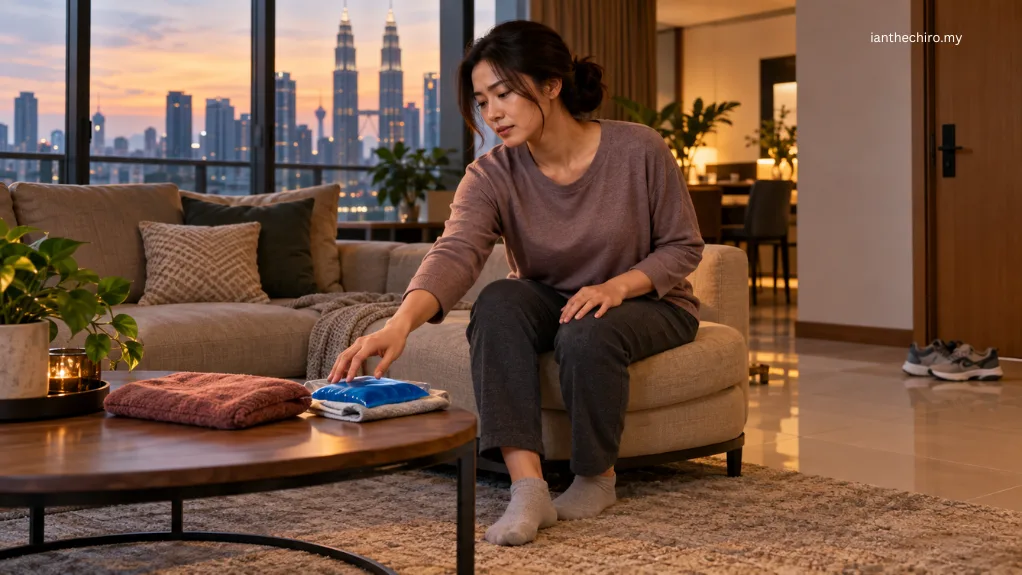
Back pain often triggers the same immediate question: should you use heat or ice? Both are cheap, easy to access and capable of changing how a painful area feels for a while, but they do not do the same thing and neither one tells you what is causing the pain.
If you are choosing heat or ice for back pain, the safest starting point is to treat them as comfort tools rather than a cure. Heat may feel better when the back is stiff, guarded or achy. Ice may feel better when the area feels newly irritated, sore after activity or more comfortable with cooling. Some people dislike one and prefer the other.
The Back Pain, Slip Disc & Sciatica guide explains why the bigger pattern still matters. A simple muscle-related flare, pain after lifting, recurring back pain and symptoms that travel into the leg should not all be managed as though they are the same problem.
The best option is usually the one that gives short-term relief without irritating your skin, making you more guarded or delaying the next useful step.
Quick Answer: Should You Use Heat or Ice for Back Pain?
There is no universal rule that says every new back pain episode needs ice first or every stiff back needs heat.
A practical way to start is:
- choose heat if warmth makes the back feel looser, calmer or easier to move
- choose ice if cooling reduces pain or makes a recently irritated area feel more comfortable
- keep the application brief and protect the skin
- stop if the skin becomes painful, excessively red, numb or irritated
- do not rely on either one as the only strategy if the pain keeps returning or limits normal function
Research on low back pain has generally found stronger short-term evidence for superficial heat than for cold. An older Cochrane review found a small short-term benefit from heat wraps in acute and subacute low back pain, while evidence for cold was too limited to draw clear conclusions.
That does not mean ice is useless. It means the evidence is less certain, and personal response matters.
Heat and ice can change symptoms without identifying the cause of those symptoms.
Why This Choice Is Less Clear Than People Think
Advice about heat and ice is often presented as if the body works on a simple timetable: ice for the first 48 hours, then heat after that. Real back pain is usually less tidy.
Many episodes do not start with a clear injury. You may wake up stiff, feel pain after a long drive, notice soreness after deadlifts, or develop an ache over several busy workdays. In those situations, there may be no meaningful “injury clock” to follow.
Even after a clear strain, the most helpful choice can vary. One person finds a cold pack soothing after lifting. Another becomes more guarded with cold and moves more comfortably after a warm shower.
The more useful question is:
“What happens to my pain, movement and confidence after I use this?”
If the back feels a little better and comfortable movement is easier, the strategy may be useful. If brief relief simply leads to hours of avoidance, the bigger recovery plan still needs attention.
The should I rest or keep moving guide explains why symptom relief and complete inactivity should not be treated as the same thing.
What Heat Can Actually Do
Superficial heat raises skin and local tissue temperature and often produces a relaxing, soothing sensation. It can temporarily reduce pain, decrease the feeling of stiffness and make movement feel easier.
Heat does not “melt” a muscle spasm, realign the spine or repair a disc. It is better understood as a temporary sensory and comfort input that may make the back easier to move.
People often prefer heat when the back feels:
- stiff after sitting
- tight after a long commute
- guarded when first getting out of bed
- achy rather than sharply painful
- uncomfortable after a long day at a desk
- better with movement once it loosens up
For someone working long hours in Kuala Lumpur and then sitting through traffic home, a warm shower or covered heat pack may feel more useful than lying still waiting for the stiffness to disappear.
If heat makes it easier to move normally, that can be more valuable than expecting the heat itself to “fix” the back.
What Ice Can Actually Do
Ice or a cold pack cools the skin and superficial tissues. The main practical effect is temporary pain relief and a numbing sensation.
Some people prefer cold after a clear aggravation, especially when the back feels hot, sore or freshly irritated after activity. Others find that cold makes them tense up and dislike it.
Ice does not pull inflammation out of the back, shrink a slipped disc or prove that the pain is caused by swelling. Low back pain is not always an inflammatory injury, and the amount of deep tissue cooling from a surface pack is limited.
That is one reason the old rule “ice means acute, heat means chronic” can be too simplistic.
If you use ice, the goal is usually comfort. If cooling makes the area feel worse, causes prolonged numbness or makes you move more stiffly afterwards, there is no need to force it simply because you were told ice is always correct for a new pain episode.
Is Heat or Ice for Back Pain Better?
For ordinary non-specific low back pain, heat has the stronger evidence base for short-term symptom relief. The evidence for ice is thinner.
That does not automatically make heat the right choice for every person or every episode.
The practical decision depends on:
- how the pain started
- whether there was a clear injury
- whether warmth or cold improves comfort
- whether either option changes movement in a helpful way
- whether there is numbness, weakness or pain travelling into the leg
- whether the pain is improving overall
- what you need to do after the pack comes off
If you are comfortable with both, heat may be a reasonable first trial for a typical stiff or achy low-back flare. If the back feels newly irritated after a specific activity and you strongly prefer cooling, a brief cold application can also be reasonable.
There is no prize for choosing the “correct” temperature. The bigger goal is to reduce symptoms enough to keep progressing safely.
What Kind of Back Pain Pattern Do You Have?
The way the pain behaves matters more than the temperature of the pack.
A stiff or guarded back
This pattern often feels worse after sitting, driving or staying in one position. The back may feel stiff when you first stand, then loosen after several minutes of walking.
Heat may feel particularly useful here because warmth can make movement more comfortable. However, the important part is usually what you do next: walking, changing position and returning gradually to normal activity.
A recent activity-related flare
You may notice pain after lifting, running, a new gym session, gardening or an unusually busy day.
Either heat or ice may provide short-term comfort. The more important questions are how much the activity changed, whether your movement is still reasonably normal, and whether symptoms settle over the next day or two.
The lifting weights with back pain guide explains how changing load, range, volume and exercise choice can be more useful than repeatedly testing the same painful movement.
Back pain with leg symptoms
Pain that travels into the buttock or leg, especially with tingling, numbness or weakness, needs a different level of attention.
Heat or ice can still be used for comfort if they feel helpful, but they do not tell you whether the symptoms are coming from a nerve, disc, joint or another structure.
If symptoms are spreading farther down the leg, weakness is developing or sensation is changing, the priority shifts from choosing a pack to getting the pattern assessed.
Recurring back pain
If you reach for the same heat pack several times every week and the pain keeps returning, the pack may be doing exactly what it is supposed to do: providing temporary relief.
The problem is expecting temporary relief to solve a recurring pattern.
The article on why pain keeps coming back explains why repeated symptoms may involve workload, recovery, activity tolerance, sleep, stress or another factor that has not changed enough.
How Long and How Safely Should You Use Heat or Ice?
The safest approach is conservative.
A common practical range is around 15 to 20 minutes at a time, with a towel or other protective layer between the pack and your skin. NHS musculoskeletal guidance similarly recommends skin protection and limited application times rather than prolonged direct exposure.
For heat:
- use a warm, not painfully hot, pack
- wrap hot water bottles or heat packs
- check the skin regularly
- do not fall asleep on an electric or microwavable heat pack
- avoid prolonged heat over skin with reduced sensation or poor circulation
For ice:
- wrap the pack in a thin towel
- avoid direct contact with bare skin
- stop if the skin becomes painful, very pale or excessively numb
- avoid icing areas where you cannot feel temperature normally
- allow the skin to warm back up before repeating
People with reduced sensation, circulation problems, certain vascular conditions or skin problems should be more cautious with temperature-based self-care.
If you are unsure whether you can safely detect heat or cold, skip the pack and use another comfort strategy instead.
Should You Use Heat or Ice After Exercise or Lifting?
You do not automatically need either.
If your back feels normal after training, there is no evidence-based reason to apply heat or ice simply because you exercised.
If there is mild soreness, ask what the next day looks like. A familiar ache that settles with walking and does not affect function is different from sharp pain, spreading leg symptoms or worsening weakness.
If heat makes the back feel easier after a long session, use it briefly. If a cold pack is more comfortable after an irritated workout, that is also reasonable.
The bigger recovery questions are:
- did training volume jump suddenly?
- did you add a new exercise or range?
- are you repeatedly training through worsening pain?
- are you sleeping and recovering normally?
- is the next session improving, stable or getting worse?
A single recovery tool cannot compensate for a repeatedly overloaded week.
What Else Should You Do Besides Heat or Ice?

This is where the biggest mistake often happens.
Heat and ice can help with comfort, but back pain recovery usually depends more on what you do through the rest of the day.
Depending on the pattern, useful steps may include:
- keep changing position rather than lying still for hours
- continue comfortable walking or daily activity
- reduce only the movements that clearly aggravate the flare
- return gradually to normal lifting or training
- avoid repeatedly testing the most painful movement
- use sleep, meals and routine recovery habits to support normal activity
- monitor whether symptoms are improving over several days rather than every few minutes
If movement feels safe but uncomfortable, the rest or keep moving framework can help you decide whether to continue, modify or stop.
For recurring back pain, the long-term goal is usually better tolerance and confidence, not a permanent dependence on packs, stretches or passive treatment.
A heat pack can make movement easier. The movement and load plan still do the heavier work.
When Heat or Ice Is Not Enough
If the back is not improving as expected, repeatedly flares with ordinary activity or keeps needing the same relief strategy, it is worth reassessing the bigger picture.
Arrange assessment if:
- pain keeps returning over weeks or months
- normal walking, work or sleep remains difficult
- you are avoiding more activities over time
- symptoms travel into the buttock or leg
- numbness or tingling persists
- you are unsure whether exercise is safe
- the pain followed a significant accident or fall
- the problem is becoming more frequent or more intense
An MRI is not automatically required. The do I need an MRI for back pain guide explains when imaging may change management and when a clinical assessment is usually a more sensible first step.
⚠️ Seek urgent medical care for major neurological or systemic warning signs
Seek urgent medical assessment for new loss of bladder or bowel control, numbness around the saddle or genital area, rapidly worsening leg weakness, severe back pain after major trauma, or back pain with significant fever and feeling seriously unwell.
Back pain with chest pain, severe abdominal symptoms, collapse or another major medical concern also needs urgent medical assessment rather than home temperature treatment.
For less dramatic symptoms, book a routine assessment if the pain is not showing a reasonable improving trend or is progressively limiting normal function.
What Not to Do
Do not use extreme temperatures because you think stronger sensation means stronger treatment.
Do not place ice directly on the skin. Do not sleep on a heating pad. Do not keep a pack on for an hour because the first ten minutes felt helpful.
Do not use heat or ice to keep testing an activity that is clearly getting worse. If you need repeated numbing just to finish a workout, the training dose probably deserves attention.
Do not assume that heat proving helpful means the problem is “muscular”. Do not assume ice helping means there must be inflammation.
And do not panic if neither works particularly well. Some back pain responds more to movement, position changes, time, graded activity or treatment of the actual contributing problem than to temperature.
How Ian Approaches Heat and Ice for Back Pain
At Ian The Chiro in Cheras, Kuala Lumpur, heat and ice are treated as optional self-management tools, not diagnostic tests.
If a patient says heat helps, that is useful information. If ice feels better, that is also useful. But the assessment still looks at what started the pain, what aggravates it, whether there are nerve symptoms, how daily activity is affected and what has changed over time.
The aim is to work out whether the problem is suitable for conservative care, whether exercise or load modification should be the main focus, whether a hands-on treatment may help, or whether medical review or imaging is more appropriate.
For many people, the useful question is not “Which pack should I keep using forever?” It is “What would help me need the pack less often?”
When Back Pain Needs More Than a Hot or Cold Pack
If the pain is mild, familiar, non-traumatic and already improving, it is reasonable to use heat or ice for short-term comfort while you keep moving within a tolerable range.
If pain keeps returning, normal activity is becoming harder, symptoms are travelling into the leg, or you are unsure what is safe, the next step is not to keep switching between hot and cold.
A chiropractic consultation at Ian The Chiro can review the pain pattern, neurological symptoms, movement, daily load and what you have already tried, then decide whether conservative care, exercise, further investigation or referral makes sense.
The goal is not to find the perfect temperature. It is to understand the problem well enough that self-management supports recovery instead of becoming the whole plan.
Frequently Asked Questions About Heat, Ice and Back Pain
Is heat better than ice for lower back pain?
Heat has better research support for short-term relief in ordinary acute or subacute low back pain, while evidence for cold is more limited. That does not mean everyone will prefer heat. If ice clearly feels better and you can use it safely, a brief trial is reasonable.
Should I use ice for the first 48 hours of back pain?
Not automatically. The “ice first for 48 hours” rule comes mainly from acute injury traditions, while many back-pain episodes do not involve a clear tissue injury. If cooling helps after a specific aggravation, use it for comfort. If warmth feels better, there is no need to wait two days simply because of the clock.
Can heat make back pain worse?
It can feel worse for some people, especially if the pack is too hot, used too long or applied to skin with reduced sensation. Stop if the area becomes more painful or irritated. Heat should feel comfortably warm, not intense.
Can ice make back pain worse?
Yes. Some people feel more guarded or stiff after cooling, and ice can injure the skin if used directly or for too long. If the back feels worse after icing, choose another comfort strategy rather than forcing it.
Should I use heat for sciatica?
Heat may make the back or buttock feel more comfortable, but it does not tell you whether the symptoms are truly sciatica or change the cause of nerve-related leg pain. If pain travels down the leg with numbness, weakness or worsening neurological symptoms, assessment matters more than the temperature choice.
Does heat or ice help a slipped disc?
They may temporarily change pain, but they do not push a disc back into place or confirm that a disc is the source of symptoms. Scan findings and symptoms need to be interpreted together rather than assuming the painful structure from one response to heat or cold.
Can I use heat or ice if my leg feels numb?
If the area where you would place the pack has reduced sensation, avoid temperature treatment until you know you can detect heat and cold safely. New or spreading leg numbness also changes the back-pain assessment, especially when it is accompanied by weakness.
What if neither heat nor ice helps my back pain?
That does not automatically mean something serious is wrong. Temperature is optional self-management, not a test of whether the back can recover. Focus on comfortable movement, activity modification and the overall trend. If pain is worsening, persistent or limiting function, arrange assessment instead of repeatedly changing packs.
When should I stop self-treating back pain at home?
Arrange assessment when pain is not improving, repeatedly returns, limits normal activity or comes with persistent leg symptoms, numbness or weakness. Seek urgent medical care for bladder or bowel changes, saddle numbness, rapidly worsening weakness, major trauma or severe systemic illness.
