
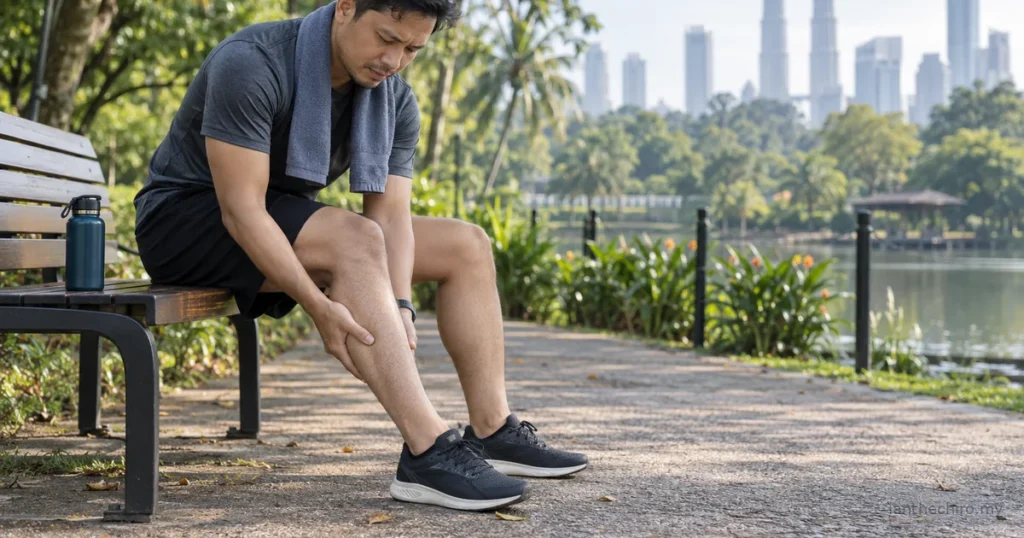
Your calf suddenly locks during a run, your foot curls under the desk, or your hamstring tightens near the end of a badminton game. The first explanation people often hear is, “You must be dehydrated.” That may be part of the story, especially after heavy sweating in Malaysia’s heat and humidity, but it is not the only explanation.
So, does dehydration cause muscle cramps? It can contribute in some situations, particularly when substantial fluid and sodium losses build up. However, exercise-related cramps are often more closely linked to muscle fatigue, unfamiliar effort and a mismatch between the work demanded and what the muscle is ready to tolerate. Recurrent cramps outside exercise may involve medications, pregnancy, nerve or circulation problems, or other medical factors. A sensible response depends on the pattern rather than assuming every cramp needs more water or electrolytes.
If cramps appear during running, court sport or gym work, the broader sports injury picture matters: which muscle cramps, when it starts, what changed in training and whether there are other symptoms.
Quick Answer: Does Dehydration Cause Muscle Cramps?
Dehydration can raise the likelihood of cramping for some people, but a cramp does not prove that you are dehydrated. Sweat removes fluid and sodium, and large losses can disturb normal function. Yet many athletes cramp without meaningful dehydration, while others become dehydrated without cramping.
The strongest practical model is multifactorial. Exercise-associated muscle cramps can reflect local neuromuscular fatigue, previous cramp history, high intensity, unfamiliar duration, heat exposure, sweat losses and individual susceptibility. Outside exercise, cramps may be idiopathic, meaning no clear disease is found, or associated with pregnancy, medication, metabolic conditions, nerve irritation or circulation problems.
Hydration is therefore one checkpoint, not a complete diagnosis. If you only add water while repeating the same sudden training spike, the cramp may return. If you only stretch a recurring calf while ignoring heavy sweat loss, that may also miss an important contributor.
What Is a Muscle Cramp?
A muscle cramp is a sudden, involuntary and often painful contraction of part or all of a skeletal muscle. The muscle may feel visibly hard or knotted, and the contraction can last from several seconds to a few minutes. Tenderness or a tired feeling may remain afterwards.
Cramps are different from general stiffness, delayed-onset muscle soreness and a muscle strain. Soreness usually develops after activity and feels more diffuse. A strain often follows a forceful movement and may produce persistent pain, weakness, bruising or pain when the muscle is loaded. A cramp is usually abrupt and temporarily prevents the muscle from relaxing normally.
Location also matters. Calf and foot cramps are common, but exercise can provoke cramps in the hamstrings, quadriceps, abdominal wall, hands or other heavily working areas. A recurring “calf cramp” that leaves pain with walking or push-off may need assessment for another problem, as explained in the calf pain after running guide.
Why the Dehydration Explanation Is So Popular
The dehydration explanation feels intuitive. Cramps often happen in hot conditions, athletes sweat heavily, and people may feel better after stopping, cooling down and drinking. Sweat contains water and electrolytes, so it is reasonable to ask whether losses altered muscle and nerve function.
The difficulty is that association is not proof of a single cause. Heat also increases cardiovascular strain and makes the same pace feel harder. A long session produces more muscle fatigue. Competition changes intensity and pacing. A person may be under-recovered or performing a task beyond their current conditioning. All of these can occur at the same time as sweating.
Research comparing athletes who cramp with those who do not has not found a single fluid or blood-electrolyte threshold that explains every episode. The modern view is not that dehydration never matters. It is that cramps cannot reliably be reduced to “low water” or “low salt” in every person.
How Muscle Fatigue Can Trigger Exercise Cramps
During sustained or intense exercise, communication between the muscle, spinal cord and nervous system changes. A fatigued muscle can become more excitable, with less of the inhibitory input that normally helps it relax. This is sometimes described as altered neuromuscular control.
The evidence-based review of exercise-associated muscle cramps concludes that the cause is probably complex and individual rather than explained by one universal mechanism. A history of previous cramps, high exercise intensity, fatigue and insufficient conditioning for the task are commonly relevant.
This explains several familiar patterns:
- a runner cramps late in a race despite following a normal drinking plan
- a footballer cramps in extra time after repeated sprints
- a gym-goer cramps during a new high-volume calf workout
- a badminton player cramps after several hard games with little recovery
- a person returns from a break and tries to match their old pace immediately
In each example, the affected muscle is being asked to produce force when its available capacity is falling. Fluid loss may add to the stress, but the local workload still matters.
When Dehydration Is More Likely to Matter
Dehydration deserves more attention when there has been substantial fluid loss or limited access to drinks. Examples include a long run in humid weather, repeated outdoor sessions, fasting combined with hard exercise, fever, vomiting or diarrhoea, and physically demanding work in the heat.
Clues that fluid loss may be contributing include thirst, a dry mouth, reduced urine output, darker urine than usual, headache, dizziness, unusual fatigue and a clear drop in performance. None of these signs is perfect on its own. Urine colour can be changed by supplements, food or the time of day, while thirst may lag behind needs during some activities.
A useful question is not simply “Did I drink water?” It is “Were my fluid and sodium losses unusually high for the duration, environment and my own sweat rate?” Someone who finishes a short indoor session with one cramp has a different exposure from someone who has been sweating heavily for several hours.
Heat, Humidity and Sweat Loss in Malaysia

In Cheras and across Kuala Lumpur, humidity can reduce how effectively sweat evaporates. Your body may keep producing sweat while cooling becomes less efficient. The same run or outdoor game can therefore feel much harder than it does in an air-conditioned setting.
People also differ substantially in sweat rate and sweat sodium concentration. White salt marks on clothing, stinging eyes and a salty taste can suggest saltier sweat, but they do not provide an exact measurement. Body size, acclimatisation, pace, clothing, genetics and environmental conditions all influence losses.
Heat exposure changes the context, not the diagnosis. Cramps with heavy sweating may be an early warning that the session is exceeding what the body can manage, but confusion, collapse, severe dizziness, vomiting or altered behaviour suggest a more serious heat illness and need urgent medical attention.
Do Electrolytes Prevent Muscle Cramps?
Electrolytes such as sodium, potassium, magnesium and calcium support normal nerve and muscle function. A true deficiency or major loss can contribute to cramping. That does not mean everyone who cramps needs a supplement.
For many ordinary sessions, normal meals and water provide what is needed. An electrolyte drink may be reasonable during prolonged exercise, repeated sessions, very heavy sweating or when a clinician has identified a specific need. The amount should match the situation rather than follow a one-size-fits-all rule.
Sodium receives the most attention in long, hot exercise because it is the main electrolyte lost in sweat. Potassium is abundant in a varied diet. Low calcium or magnesium can cause neuromuscular symptoms, but clinically important deficiencies usually require proper assessment rather than guesswork.
Overcorrecting can also create problems. Drinking excessive plain water during prolonged exercise can dilute blood sodium, while taking concentrated salt or supplements without a clear plan may upset the stomach or be unsuitable for people with kidney, heart or blood-pressure conditions.
Does Magnesium Help Cramps?
Magnesium is heavily marketed for cramps, but the answer depends on the population and cause. A Cochrane review of magnesium for skeletal muscle cramps found that magnesium was unlikely to provide clinically meaningful prevention for idiopathic cramps in older adults. Evidence in pregnancy-related cramps was uncertain, and there was not enough reliable evidence to treat all exercise cramps as magnesium-responsive.
That does not mean magnesium is irrelevant. A confirmed deficiency should be addressed, and some people need investigation because of diet, gastrointestinal loss, kidney issues or medication. It means that a cramp is not a reliable magnesium test.
Before starting a supplement, consider why the cramp is occurring, whether there are other symptoms and whether the product is safe with your health conditions and medicines. More is not automatically better, and supplements can cause side effects or interact with treatment.
Training Load Often Explains the Timing
Cramps frequently appear after a change in demand. The change may be obvious, such as doubling running distance, adding hill repeats or returning to futsal after months away. It may also be subtle: harder rallies, shorter rest, a new shoe, poor sleep, a second training session on the same day or a week of accumulated fatigue.
Ask what changed in the previous one to three weeks:
- total duration, distance or number of sessions
- pace, sprinting, hills or court intensity
- strength-training volume or exercise selection
- heat exposure or time of day
- sleep, illness, travel, fasting or work stress
- footwear, surface or technique demands
- recovery time between sessions
The cramp-prone muscle is often the one doing more work than usual. Calf cramps may follow extra hill running or repeated jumping. Hamstring cramps may appear late in sprinting. Foot cramps may occur with prolonged gripping or unfamiliar footwear. When pain persists beyond the cramp, related guides such as Achilles pain after running can help distinguish a transient spasm from a load-related tendon pattern.
Previous Cramps and Individual Susceptibility
A previous history of exercise-associated cramps is one of the most useful clues that another episode may occur. This does not mean the cramp is inevitable. It suggests that the individual pattern deserves attention.
Some people cramp only during competition, at a predictable distance or after a particular exercise. Others cramp at night after a hard day. Mapping the details can reveal more than a generic supplement trial:
- Which muscle cramps first?
- At what time, distance or intensity does it begin?
- Was the muscle already sore or tired?
- Did the person drink substantially less or more than usual?
- Was there a recent training change?
- Does a lower pace or planned rest delay the cramp?
- Are there numbness, weakness, swelling or persistent pain?
Patterns that repeat under similar demands point towards a capacity and fatigue problem. Patterns that become widespread, occur at rest or accompany neurological or systemic symptoms need a broader medical view.
What Else Can Cause Muscle Cramps?
Not every cramp is exercise-associated. The setting, age, health history and accompanying symptoms change the possibilities.
Prolonged position and ordinary night cramps
Some people develop calf or foot cramps while sleeping or after holding a position for a long time. These cramps are common and often have no single identifiable disease. They may relate to age, muscle and nerve excitability, shortened sleeping positions or daily load. Gentle movement and a regular calf-strength routine may help some people, but persistent episodes still deserve review.
Pregnancy
Leg cramps are common during pregnancy, particularly later on. Fluid balance, circulation, activity changes and other physiological factors may contribute. New severe swelling, headache, breathlessness or other concerning symptoms should be discussed promptly with the maternity team rather than managed as a routine cramp.
Medication and substance effects
Some medicines are associated with cramps or muscle symptoms, including certain diuretics, cholesterol-lowering medicines and bronchodilators. This does not prove that a medicine caused an individual cramp. Do not stop prescribed medication on your own. A clinician or pharmacist can review timing, dosage, interactions and whether blood tests are appropriate.
Nerve, circulation and metabolic conditions
Peripheral nerve disorders, nerve-root irritation, thyroid disease, kidney or liver problems, diabetes and significant electrolyte abnormalities can be associated with cramps. A cramp alone rarely identifies which condition is present. Weakness, altered sensation, swelling, colour change, unusual fatigue or cramps in several body regions make clinical assessment more important.
Referred or load-related pain mistaken for cramp
People sometimes call any sharp tightening a cramp. Pain referred from the lower back, a tendon problem or a muscle strain can feel similar. If symptoms travel, tingle or change with spinal position, the lower back pain after running guide explains why the source may not be the tightest-feeling spot.
What to Do During a Muscle Cramp
Stop the provoking activity and move to a safe place. For an isolated exercise cramp without injury signs, a slow, gentle stretch that lengthens the affected muscle often helps it relax. Do not bounce or force the joint. Light massage and easy movement may help once the contraction releases.
Then assess the whole situation:
- Move out of the heat and loosen unnecessary clothing.
- Sip fluid rather than rapidly forcing a large volume.
- Consider a drink containing sodium if the session was prolonged, sweat loss was heavy and it is appropriate for your health.
- Do not immediately sprint, lift heavily or return to the same intensity.
- Check for persistent pain, weakness, swelling, dizziness or other symptoms.
If the cramp followed a sudden forceful movement and the muscle remains painful or weak, treat it as a possible injury rather than trying to stretch through it. Repeatedly testing the muscle at full effort can worsen a strain.
How to Hydrate Without Overdoing It
The goal is to avoid both inadequate intake and excessive drinking. Fluid needs vary, so rigid universal amounts are less useful than an individual plan.
For longer or hotter sessions, estimate your sweat loss by comparing body weight before and after exercise under similar conditions. A one-kilogram decrease roughly reflects one litre of net fluid loss, after accounting for what you drank and any urine produced. One measurement is not a prescription, but repeated observations can guide a more realistic plan.
Practical habits include:
- begin exercise normally hydrated rather than “catching up” at the start
- bring accessible fluid for long or hot sessions
- drink according to a planned range and thirst, without forcing large volumes
- replace losses gradually after exercise alongside normal food
- include sodium strategically for prolonged heavy sweating when appropriate
- monitor how the plan works across different conditions
People with kidney, heart, blood-pressure or fluid-balance conditions should obtain personalised medical advice. Fasting, illness or medications may also change what is safe.
How to Reduce Exercise-Associated Cramps
There is no guaranteed prevention method, but a pattern-based plan is more useful than relying on one product.
Build the exact capacity the activity needs
Progress duration, intensity and repeated efforts gradually. A runner needs calf and hamstring capacity late in a run, not only when fresh. A badminton player needs repeated accelerations, lunges and jumps. Strength work, sport-specific conditioning and sensible exposure can improve tolerance.
Pace the session you are ready for
Starting faster than usual can bring fatigue forward. Competition excitement often changes pacing even when the distance is familiar. Practise the target pace and nutrition-hydration plan before an important event.
Review recovery
Poor sleep, illness, low energy intake and dense training schedules can reduce capacity. Recovery does not mean complete rest after every hard session. It means arranging hard and easier work so the body can adapt.
Use stretching for the right purpose
Gentle stretching is useful to relieve an active cramp. Regular flexibility work may help if a specific movement restriction matters, but stretching alone does not correct every fatigue or load problem. If temporary relief keeps fading, the article on recurring muscle tightness explains why strength, movement and workload may matter more.
Test one change at a time
If you simultaneously change your drink, supplement, shoes, pace and warm-up, you will not know what helped. Track the timing and conditions of cramps, then test a small number of plausible changes.
When Muscle Cramps Need Medical Attention
Most brief, isolated cramps settle. A different response is needed when the cramp is part of a heat illness, muscle breakdown, circulation problem, neurological change or significant fluid loss.
⚠️ Seek urgent medical care for cramps with confusion, collapse, fainting, severe dizziness, repeated vomiting, chest pain, breathlessness, marked weakness, severe swelling, a cold or discoloured limb, or dark tea-coloured urine. Stop exercise and move out of the heat while help is arranged.
Dark urine with severe muscle pain or weakness after strenuous exercise can be a sign of rhabdomyolysis, which needs prompt medical assessment. One swollen, warm and painful leg, particularly with breathlessness or chest pain, also requires urgent evaluation.
Book a non-urgent medical review when cramps are frequent, worsening, widespread, regularly wake you, occur without an obvious trigger, or come with numbness, persistent weakness, muscle wasting, twitching or other unexplained symptoms. The clinician may review medications, circulation, nerve function and whether targeted blood tests are appropriate.
How a Clinician Assesses Recurrent Cramps
Assessment starts with the story. The clinician will ask when the cramp occurs, which muscles are involved, how long it lasts and what happens afterwards. Exercise volume, heat exposure, fluid intake, diet, sleep, illness, pregnancy, medications and previous injuries may all be relevant.
The physical examination depends on the pattern. It may include muscle strength, joint movement, nerve screening, reflexes, sensation, pulses, swelling and the ability to reproduce symptoms with a task. Exercise-related cramps may require a look at pacing, technique, fatigue and the capacity of the affected muscle.
Blood tests are not automatically needed for every cramp. They are more useful when the history suggests electrolyte disturbance, kidney or liver disease, thyroid problems, medication effects or another systemic cause. Imaging is usually reserved for a suspected injury or a different diagnosis, not the cramp itself.
The aim is not to assign a dramatic label. It is to separate a common fatigue-related pattern from a problem that needs medical treatment, referral or a different rehabilitation plan.
Can Chiropractic Care, Exercise or Dry Needling Help?
Treatment should match the contributing pattern. Chiropractic care does not “put electrolytes back” or cure dehydration. If the cramp reflects heat illness, a metabolic problem or a medication effect, medical management comes first.
For musculoskeletal patterns, assessment may identify a load spike, movement limitation, joint irritation, weakness or poor tolerance to repeated effort. Exercise rehabilitation can then build the relevant capacity. Advice may include graded return to running, calf or hamstring strengthening, pacing and recovery changes.
Hands-on care may be used selectively for comfort or movement when appropriate. An adjustment targets a relevant joint finding. Soft-tissue work addresses local sensitivity or muscle tone. Dry needling may temporarily reduce a tight or sensitive feeling in some cases, but it does not replace hydration, conditioning or investigation of medical causes. If considering it, read what to expect from dry needling soreness and aftercare.
No single modality should be automatic just because a muscle cramped. The useful question is what the episode reveals about the person’s current load, recovery, health and environment.
What to Avoid After a Cramp
Avoid assuming the episode proves one deficiency. Buying several supplements can distract from training and medical factors, and may create side effects. Avoid drinking excessive water quickly, especially during prolonged exercise. Avoid salt tablets without an appropriate plan.
Do not force an aggressive stretch into sharp pain, and do not immediately return to maximal effort. A muscle that stays painful, weak or swollen after the contraction may be injured. Do not stop prescribed medication without speaking to the prescriber.
Finally, avoid using short-term relief as proof that the cause has been fixed. A drink, stretch or massage can help the moment settle while the original workload pattern remains unchanged.
How Ian The Chiro Approaches Recurrent Muscle Cramps
At Ian The Chiro, the first step is to decide whether the presentation is mainly exercise-related and musculoskeletal or whether medical assessment should come first. The history includes training changes, timing, heat and sweat exposure, medication, other symptoms and what happens after the cramp.
If the pattern appears musculoskeletal, the assessment may look at strength, joint movement, nerve function and how the affected area behaves under load. The plan can include education, activity adjustment and progressive exercise. Adjustments, dry needling or soft-tissue work are considered only when clinically appropriate and with consent, not as compulsory treatment.
If cramps keep returning, disrupt sport or occur with persistent pain, a chiropractic consultation in Cheras can help clarify the pattern and whether rehabilitation, medical review or another next step makes sense.
Frequently Asked Questions
Does dehydration cause muscle cramps at night?
It can contribute if you have had substantial fluid loss, but common night cramps often have no single clear cause. Age, pregnancy, prolonged positions, medication and nerve or medical factors may be relevant. Frequent night cramps deserve review rather than automatic electrolyte treatment.
Is water or an electrolyte drink better for cramps?
Water is often enough for shorter, ordinary activity. An electrolyte drink may be useful during prolonged exercise, repeated sessions or heavy sweating, particularly when sodium losses are high. The best choice depends on duration, environment, diet, health and individual sweat losses.
Why do I cramp even when I drink plenty of water?
Fluid is only one factor. High intensity, muscle fatigue, unfamiliar duration, previous cramp history and insufficient sport-specific conditioning can all contribute. Drinking more does not remove the need to manage pacing and training load.
Can too much water cause cramps?
Excessive water intake during prolonged exercise can dilute blood sodium and become dangerous. Symptoms may include headache, nausea, confusion or swelling, not just cramps. Avoid forcing fluid beyond a sensible plan, and seek urgent care for neurological symptoms.
Should I take salt tablets for muscle cramps?
Not routinely. They may be inappropriate or harmful for some people and can cause stomach upset. A tailored sodium strategy is more defensible for prolonged heavy sweating than taking tablets simply because one cramp occurred.
Why does my calf keep cramping during runs?
Look at when the cramp begins, recent mileage or pace changes, hills, footwear, recovery and sweat exposure. Persistent calf pain, weakness or tenderness after the cramp may indicate a strain, tendon problem or another issue rather than a simple spasm.
Can a pinched nerve cause muscle cramps?
Nerve disorders can be associated with cramping, especially when there is numbness, altered sensation, weakness, twitching or radiating pain. A cramp alone does not confirm a pinched nerve. An examination helps determine whether neurological testing is needed.
When should I worry about frequent muscle cramps?
Arrange medical assessment if cramps are worsening, widespread, unexplained, regularly disturb sleep or occur with weakness, numbness, swelling, colour change, weight loss or medication changes. Seek urgent care for confusion, collapse, severe weakness, dark urine, chest pain or breathlessness.