Ian The Chiro  ·  Cheras, Kuala Lumpur  ·  By Appointment  ·  Closed Monday & Thursday

Hip, Knee, Ankle & Heel Pain Relief in Cheras, KL

Lower extremity symptoms frequently interact along the weight-bearing kinetic chain. Whether you are dealing with a deep hip pinch, runner's knee ache, Achilles stiffness, or sharp morning heel pain, a thorough clinical evaluation comes first.

At Ian The Chiro in Cheras, Kuala Lumpur, we evaluate how your lower back, pelvis, hip alignment, knee tracking, and foot arches work together before deciding whether gentle joint mobilization, consensual dry needling for tight glutes or quads, or medical co-management makes sense.

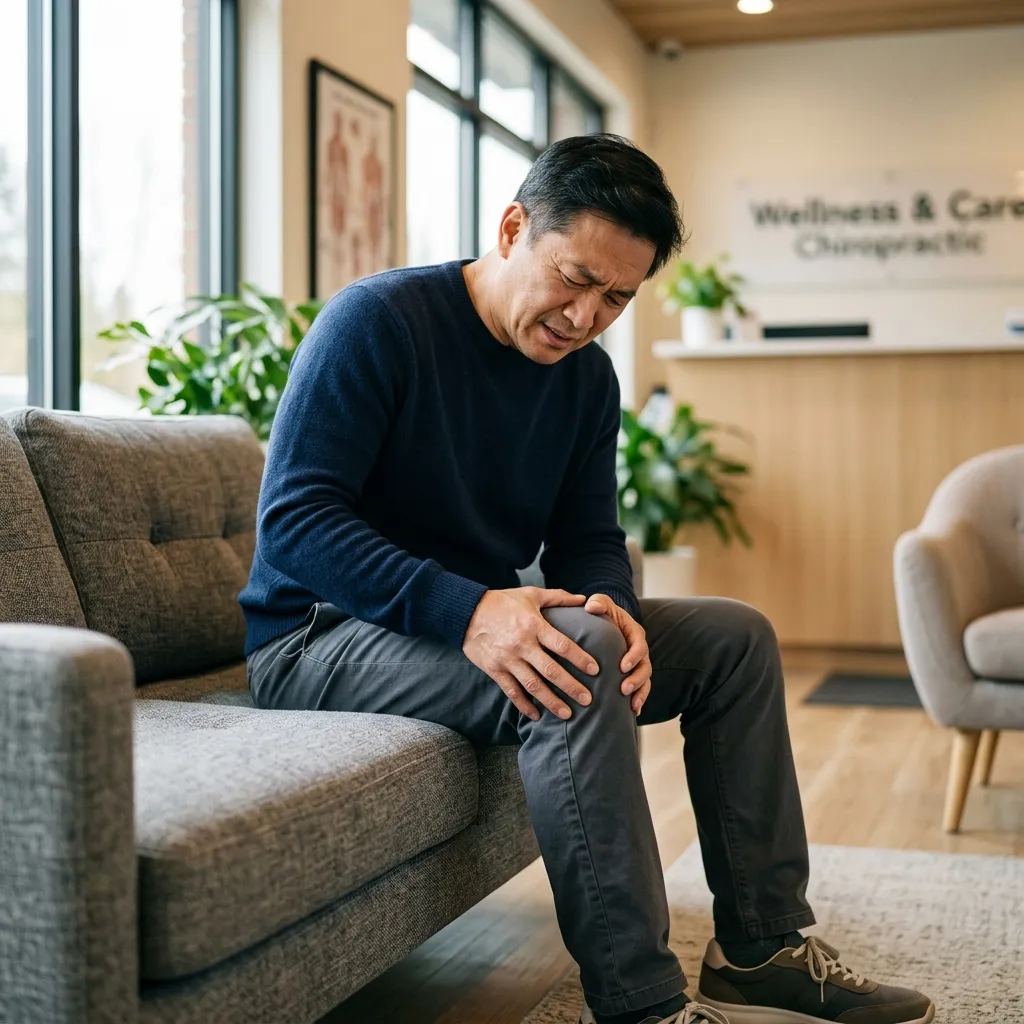
Man sitting on a sofa clutching his knee in severe pain, depicting knee joint stiffness, running injury, and hip or knee pain relief in Cheras, Kuala Lumpur
Hip impingement (FAI)
Gluteal tendinopathy
Runner's knee tracking
Meniscus load sensitivity
IT band friction
Patellar tendon strain
Achilles stiffness
Plantar fasciitis
Clinical Triage

When should you get your hip, knee, ankle, or heel checked?

Every step you take transfers ground reaction forces upward through your foot arch, ankle, knee, hip, and pelvis. An unaddressed restriction in your ankle can alter how your knee tracks, while pelvic misalignment can overload the outer hip tendons.

  • ✓ Deep groin pinch when sitting or squatting: Catching discomfort in the front of the hip when driving, sitting in deep sofas, or tying shoes (hip impingement / FAI).
  • ✓ Outer hip pain when lying on your side: Inability to sleep on the affected hip due to deep aching over the greater trochanter bone (gluteal tendinopathy).
  • ✓ Knee pain when walking down stairs or squatting: Dull aching or crepitus behind or around the kneecap that flares up with descents (runner's knee / patellofemoral pain).
  • ✓ Sharp pain on the outside of the knee when running: A stinging or burning sensation after 10 to 15 minutes of running or cycling that forces you to stop (IT band friction).
  • ✓ Morning heel pain on the first steps out of bed: Sharp, bruised heel pain that eases slightly after walking around but tightens again after resting (plantar fasciitis).
  • ✓ Achilles tendon tightness and morning stiffness: Soreness or thickening 2 to 6 cm above the heel bone when taking your first steps or running uphill.
Diagnostic Workflow

How Ian assesses lower extremity pain

Because the lower limb is a continuous weight-bearing kinetic chain, addressing the knee or heel without checking the hip and foot mechanics often leads to recurring frustration.

1

Gait & Weight-Bearing History

We review when your pain began, daily walking distance, running mileage, footwear wear patterns, past ankle sprains, and how symptoms behave during standing or stair climbing.

2

Orthopedic & Ligamentous Stress Testing

Targeted physical testing (FADIR, FABER, McMurray, Lachman, Patellar tracking, Thompson test, and Windlass test) helps distinguish joint cartilage wear from tendon overload or ligament laxity.

3

Tendon Palpation & Pelvic Alignment

We examine the sacroiliac joints, piriformis, gluteal tendons, patellar tendon, pes anserinus, Achilles tendon, and plantar fascia to map primary tissue irritation versus compensatory tightness.

4

Transparent, Consensual Care Plan

We explain our clinical findings clearly and recommend appropriate next steps: targeted joint mobilization, consensual dry needling for protective muscle spasms, active loading exercises, or hospital referral when indicated.

Core Clinical Foundations

Lower extremity condition basics

Understanding how joints, tendons, and weight-bearing forces interact helps you recover faster and prevents recurring breakdown.

Diagnostic Protocol

Hospital Scans Welcome

If you already have X-rays, ultrasound, or MRI reports from a hospital or imaging centre, please bring them along. We review the physical films and radiologist reports with you.

No scans yet? You do not need to pay for imaging prior to your first visit. Our comprehensive orthopedic examination evaluates whether clinical indications for imaging exist first.

Safety boundary: If examination reveals suspected tendon rupture, acute ligament tear, or severe fracture, we will provide a referral letter for urgent hospital review.

Attire & Preparation

Comfortable Attire for Testing

Lower extremity assessments involve squatting, gait analysis, single-leg balance testing, and range of motion checks of the hips, knees, and ankles.

What to wear: Please wear loose gym shorts or flexible activewear that allows easy inspection of the knees, lower legs, and bare feet.

Modesty and comfort: We maintain complete privacy and provide comfortable clinic coverage if changing is required before examination.

Loading Principles

Progressive Capacity vs Total Rest

Lower limb tendons and joint cartilage thrive on controlled progressive loading. Total bed rest often leads to calf, glute, and quadriceps atrophy, making return to walking more painful.

Targeted loading: Graduated isometric and eccentric loading rebuilds tendon tensile tolerance so you can walk, run, and take stairs without recurring flare-ups.

Sensible modifications: We guide practical activity changes rather than demanding complete cessation of all daily movement.

Transparent Pricing

Clear fees with zero high-pressure packages

If you are looking for hip, knee, ankle, or heel pain care in Cheras, you deserve complete upfront clarity on visit costs.

We do not lock patients into aggressive 30 to 50 session contracts or push unnecessary procedures. You receive honest clinical evaluation and pay per session as your recovery progresses.

Transparent Pricing First Visit

Initial Consultation

RM150 / session

Comprehensive orthopedic assessment and kinetic chain gait analysis to identify the mechanical root cause of your lower limb pain.

Initial Visit (RM150): Full clinical history, orthopedic testing, and diagnosis explanation before treatment.
Treatment (From RM120): Targeted hands-on adjustments, dry needling & active rehab if clinically suitable.
No Lock-In Contracts: Pay per visit as you recover. Optional multi-session care plans available upon request.
Book Consultation via WhatsApp (RM150)
Clinical Patterns

Common hip, knee, ankle & heel presentations we assess

Lower limb discomfort follows distinct biomechanical patterns. Identifying your specific presentation helps determine whether irritation originates from joint restrictions, tendon overload, or kinetic chain compensation.

Hip Impingement (FAI)

Deep anterior groin pinch aggravated by deep squatting, sitting in low chairs, driving, or bringing the knee toward the chest.

Gluteal Tendinopathy (Outer Hip)

Aching over the outer hip bone (greater trochanter) that prevents comfortable side-sleeping and worsens with prolonged single-leg standing.

Runner's Knee (Patellofemoral)

Ache around or behind the kneecap that flares up during stair descents, deep knee flexion, lunges, or prolonged sitting with bent knees.

Meniscus Sensitivity & Joint Line Pain

Localized joint line tenderness triggered by twisting on a planted foot, kneeling, or deep squatting, often with a feeling of tightness or catching.

IT Band Friction Syndrome

Sharp, burning pain along the outside of the knee that develops consistently after running or cycling for 10 to 20 minutes.

Patellar Tendinopathy (Jumper's Knee)

Focal tendon pain just below the kneecap, triggered by jumping, landing deceleration, heavy squats, or rapid direction changes.

Achilles Tendinopathy & Stiff Calf

Morning tightness, thickening, and soreness 2 to 6 cm above the heel bone that warms up initially but aches sharply after prolonged running.

Plantar Fasciitis & Ankle Instability

Intense first-step morning heel pain, arch soreness, and chronic ankle wobble or clicking following past inversion ankle sprains.

Clinical Scope & Suitability

Our clinical approach to lower extremity care

We combine hands-on manual techniques with progressive active loading to resolve movement restrictions and restore functional capacity.

Who Our Conservative Care Is For

  • ✓ Subacute & chronic tendon strain: Patellar tendinopathy, gluteal tendinopathy, Achilles soreness, or plantar fascia tension from running, walking, or gym training.
  • ✓ Joint stiffness & mobility loss: Non-surgical knee joint tightness, mild hip impingement, or chronic ankle stiffness following past sprains.
  • ✓ Protective muscular guarding: Deep trigger points in the glutes, tensor fasciae latae (TFL), quadriceps, or calves that respond well to targeted dry needling.
  • ✓ Gait & movement goals: Patients seeking clear loading guidance, foot arch support advice, and progressive exercises to return to walking, running, or stairs pain-free.

When Orthopedic or Medical Referral Is Recommended

  • ✕ Deep Vein Thrombosis (DVT) red flags: Sudden unilateral warm, painful, swollen calf, especially following prolonged travel, surgery, or bed rest (requires urgent emergency medical assessment).
  • ✕ Acute tendon ruptures or complete ligament tears: Sudden snap with total inability to push off (suspected Achilles tendon rupture) or immediate gross knee instability following trauma.
  • ✕ Suspected bone fractures: Inability to bear weight for four steps immediately after acute trauma accompanied by localized bony tenderness (Ottawa ankle/knee criteria).
  • ✕ Signs of septic arthritis or infection: A knee, hip, or ankle that becomes rapidly hot, intensely red, and tensely swollen with high fever or chills.
Verified Patient Feedback

Real hip, knee, ankle & foot relief stories

Authentic feedback from patients in Cheras and KL who sought unhurried assessment and targeted conservative care.

Answers & Clarity

Frequently asked questions about hip, knee, ankle & heel pain

Clear, direct answers to common clinical and procedural questions before booking your visit.

True hip joint pain is almost always felt in the deep anterior groin or front of the upper thigh, and worsens when you bend, squat deeply, or put on socks. Pain located in the upper buttock, side of the hip, or radiating down the back of the thigh past the knee is frequently referred from lumbar spinal joints, disc bulges, or the sacroiliac joint. During your initial assessment, we test both the lumbar spine and the hip joint to isolate the true primary driver.

Chiropractic care comprehensively evaluates extremity joints as well as the spine. Knee pain frequently results from poor patellar tracking caused by hip muscle weakness, restricted ankle dorsiflexion, or pelvic rotation that forces the knee to twist under load. By restoring proper mobility to the ankle, fibular head, pelvis, and lumbar spine, we relieve compensatory mechanical overload on the knee joint.

Runner's knee (patellofemoral pain syndrome) occurs when the kneecap rubs unevenly in the femoral groove. Descending stairs requires the quadriceps to contract eccentrically (lengthening under body weight), which dramatically increases the compressive force between the kneecap and thigh bone. Addressing tight quadriceps, strengthening weak hip abductors, and optimizing foot mechanics resolves this abnormal pressure.

No. You do not need an MRI or X-ray before your first visit. Our comprehensive orthopedic and physical examination accurately assesses joint stability, meniscus irritation, and tendon integrity. If your clinical findings indicate that imaging is necessary, we will discuss appropriate referral options with you. If you already have existing MRI, CT, or X-ray reports, please bring them along.

Plantar fasciitis involves micro-strain and thickening of the fibrous band beneath the foot arch. Overnight, the fascia contracts in a shortened position; taking your first morning steps forcefully tears open sensitive tissue. We combine gentle ankle and foot joint mobilization, dry needling to release hypertonic calf muscles (gastrocnemius/soleus), and targeted progressive loading (such as high-load heel raises) to rebuild tissue capacity.

Achilles tendinopathy often causes morning stiffness because tendons have limited blood supply and contract when inactive during sleep. Moving around increases tendon temperature and lubrication, providing temporary relief, but prolonged walking or running later triggers sharp soreness. We guide progressive isometric and eccentric calf loading to stimulate collagen remodeling and restore tendon elasticity.

Yes. When lower extremity joints are stressed, surrounding muscles lock into rigid protective spasms. Dry needling uses fine, sterile single-use acupuncture needles placed into deep trigger points in the gluteus medius, tensor fasciae latae (TFL), quadriceps, or deep calf muscles. Eliciting a local twitch response rapidly releases chronic muscle tightness, restores local blood flow, and reduces tension on connected tendons.

While often diagnosed interchangeably as "trochanteric bursitis", modern imaging shows that primary bursal inflammation is relatively rare. The true underlying issue is usually tendinopathy of the gluteus medius or minimus tendon where it attaches to the hip bone, with the bursa reacting secondarily. Treatment focused solely on anti-inflammatory injections often fails because the tendon requires progressive strengthening to tolerate tensile load.

The pelvis serves as the mechanical bridge between your spine and legs. If the sacroiliac joint is restricted or the pelvis tilts unevenly, it functionally alters the leg length and causes the thigh bone to rotate inward. This internal rotation forces the knee into a valgus (inward collapse) posture and collapses the foot arch, creating compensatory strain that leads to knee pain, shin splints, or plantar fasciitis.

You should seek immediate emergency medical care if: (1) you have sudden, severe calf pain with warm, red, unilateral swelling (suspected Deep Vein Thrombosis / DVT); (2) you heard a loud snap followed by total inability to push off your foot or raise up on your toes (suspected acute Achilles tendon rupture); (3) you experienced trauma and cannot bear weight for four steps with severe bony tenderness (Ottawa fracture rule); or (4) a joint becomes rapidly hot, intensely red, and swollen with high fever (possible septic arthritis). These require emergency medical evaluation rather than outpatient manual therapy.

Browse All Clinic FAQs

Ready to get your hip, knee, ankle, or heel properly assessed?

If you are dealing with persistent hip stiffness, knee pain on stairs, or morning heel pain that limits your walking or running, start with an honest clinical consultation.

You do not need to guess which treatment you need before booking. We assess first, explain clearly, and decide what makes clinical sense based on how your symptoms present on the day.

🎁 RM198 Starter Pass
🎁 RM198 Offer WhatsApp Us
🔍 60-Second Free Check
Check if your condition is suitable for chiropractic care.
Start Now