
M
Meiqi
★★★★★
"Great visit! My posture improved significantly after the first treatment, and Dr Ian was very insightful in explaining my spinal alignment. Will be back regularly for follow-ups."
Persistent postural fatigue, uneven shoulders, desk hunching, and deep burning knots between the shoulder blades can make sitting or standing comfortably an everyday battle.
At Ian The Chiro in Cheras, Kuala Lumpur, we evaluate spinal alignment, muscle imbalances, and joint mobility to deliver gentle conservative care, dry needling for stubborn trigger points, and active postural rehab.
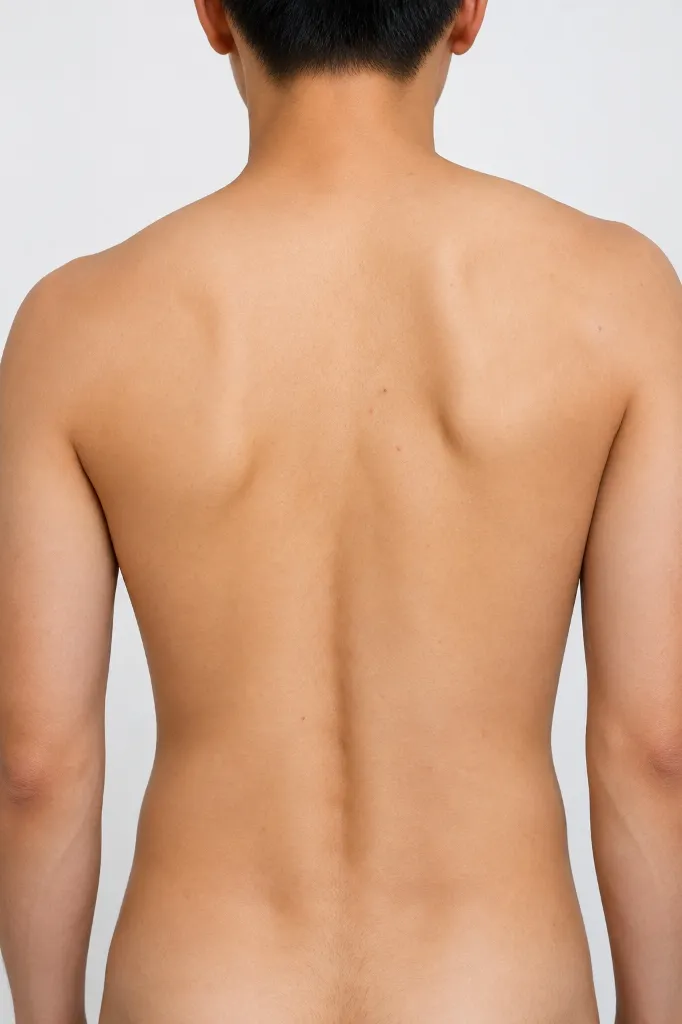
Spinal curvatures and postural fatigue develop gradually under repetitive asymmetrical loads. Rather than tolerating chronic upper back burning, uneven clothing fit, or muscle spasms, consider getting evaluated if you notice:
Our primary clinical focus is differentiating structural curves from functional muscle imbalances and identifying whether conservative chiropractic care is appropriate.
Your initial consultation includes postural landmark evaluation, spinal mobility testing, myofascial trigger point palpation, and review of past spinal X-rays.
By appointment only. Cheras Business Centre, Kuala Lumpur.
WhatsApp to Book See Pricing FirstPostural aches are rarely just about bad habits. Your consultation systematically maps structural alignment, joint mechanics, and soft tissue holding patterns.
We analyze plumb line alignment, shoulder unleveling, head carriage translation, pelvic tilt, and workstation ergonomic demands that place repetitive asymmetric loads on your spine.
Targeted forward-bending tests evaluate rotational rib prominence and determine whether your curve is a flexible functional posture or a fixed structural scoliosis.
Direct palpation identifies hyper-irritable taut muscle bands in the upper trapezius, rhomboids, levator scapulae, and deep erector spinae that perpetuate chronic burning aches.
A consensual multi-modal strategy combining gentle joint mobilization, targeted dry needling, ergonomic tweaks, and active neuromuscular rehabilitation exercises.
Understanding the interplay between bony spinal curves and muscular compensation helps you take control of your daily comfort and mobility.
If you already have whole-spine EOS or full-spine X-rays from an orthopedic center, please bring them along. We review the films and Cobb angle measurements with you.
No past X-rays? That is completely fine. We do not require routine re-imaging before your initial visit. Our physical assessment evaluates functional mobility and joint motion first.
When scans are required: If examination suggests progressive adolescent scoliosis or structural anomalies, we will advise on appropriate imaging centers.
Conservative chiropractic care focuses on relieving muscular tension, improving spinal joint flexibility, and reducing mechanical strain from postural asymmetry.
Honest limitations: Manual care does not reverse structural Cobb angles in mature adult spines. We never promise unrealistic cosmetic curve straightening.
Orthopedic referral: Severe curves requiring rigid bracing or surgical consultation receive transparent, prompt referral to spine specialists.
Passive treatments like adjustments and dry needling provide immediate muscular and joint relief, but sustained postural stamina requires active retraining.
Targeted rehab: We prescribe simple, targeted stabilization exercises to activate inhibited postural stabilizers (such as the lower trapezius and deep neck flexors).
Daily resilience: This dual approach breaks the chronic cycle of fatigue and prevents postural tension from rebounding after work hours.
If you are searching for scoliosis, postural, or myofascial pain care in Cheras, you deserve upfront clarity on consultation and care costs.
We do not lock patients into 30 to 50 session prepaid contracts. You receive an objective clinical evaluation and pay per session as your posture and comfort improve.
Comprehensive diagnostic evaluation designed to assess your spinal curvature, postural mechanics, and myofascial trigger points.
Postural strain manifests differently across individuals. Identifying your specific presentation helps customize manual care and active corrective exercises.
Coronal lateral deviation of the spine with segmental vertebral rotation, creating chronic muscular tension along the concave and convex sides.
Rotational asymmetry of the rib cage visible during forward bending, resulting from axial vertebral twisting within the thoracic spine.
Anterior translation of the cervical spine, placing excessive shearing loads on the suboccipital muscles and upper trapezius.
Bilateral unleveling of the acromion or iliac crests, leading to compensatory spinal side-bending and uneven walking stride.
Hyper-irritable nodules within taut skeletal muscle bands (rhomboids, levator scapulae) producing localized burning and referral pain.
Exaggerated thoracic rounding resulting from prolonged seated computer work, collapsing anterior chest volume and fatiguing back extensors.
Serratus anterior or lower trapezius weakness allowing the medial border of the shoulder blade to lift away from the posterior rib cage.
Targeted core bracing and axial spinal elongation exercises that reinforce active upright alignment and counteract gravity loads.
We believe in setting clear, honest clinical expectations from day one so you know exactly what to expect from our clinic.
Authentic feedback from patients in Cheras and KL who sought unhurried assessment and targeted conservative care.
Meiqi
"Great visit! My posture improved significantly after the first treatment, and Dr Ian was very insightful in explaining my spinal alignment. Will be back regularly for follow-ups."

Ving See Leong
"Dr. Ian is very friendly and professional. He not only addressed my main concern but also discovered other underlying issues that I wasn't even aware of. He patiently explained everything and taught me useful exercises to help maintain good posture. Highly recommended!"

Sarini B
"Dr Ian is very detailed and patient. Love his explanation of what caused my pain. He provided immediate relief to my sore arm and shoulder, and gave me home exercises to improve my posture. It helps that he's also fun and has a great personality!"
Wa Tim
"Before coming in, I thought my pain was groin pain or a disc issue... but Ian found the issue was deeper and made something complicated seem simple. He started with dry needling: every needle felt like opening another door in my body. Little by little, things started releasing. I still can't believe how much better I feel. Highly recommended!"
Clear, direct answers regarding consultation, curve management, dry needling, and realistic expectations.
No, conservative chiropractic care does not cure or completely straighten structural adult scoliosis. In skeletally mature adults, the bony curvature (Cobb angle) is fixed.
However, chiropractic care, dry needling, and active rehabilitation are highly effective for relieving the compensatory muscular tension, facet joint stiffness, and chronic fatigue caused by asymmetrical spinal loads.
Structural scoliosis involves true three-dimensional vertebral rotation and lateral deviation that remains evident regardless of body position. It creates a visible rib hump on forward bending (Adams test).
Functional poor posture (such as slouching, desk hunching, or forward head carriage) stems from muscular imbalances and joint stiffness without fixed bony rotation; it typically straightens out when actively holding an erect posture or lying down.
Trigger points form when muscle fibers remain in a prolonged, sustained contraction, often due to continuous desk slouching, forward head tilt, or asymmetric spinal support. This sustained tension impairs microcirculation and causes local metabolic distress.
The resulting taut band becomes hyper-sensitive, creating the classic hard knot that aches locally and refers pain into the neck, head, or between the shoulder blades.
Yes. Dry needling is exceptionally effective for deep, stubborn myofascial trigger points that cannot be fully released by manual surface massage. Fine filiform needles are inserted directly into the tight motor band.
This elicits a brief local twitch response, interrupting the dysfunctional contraction cycle, improving blood flow, and allowing tight postural muscles (such as the upper trapezius and rhomboids) to reset.
Absolutely. Most adult scoliosis patients seek care not for cosmetic straightening, but for relief from daily muscular fatigue, unilateral joint stiffness, and restricted breathing or walking stamina.
Our focus is optimizing segmental spinal joint motion, balancing hypertonic muscle groups, and building postural stamina so you can work and exercise without persistent discomfort.
Rigid bracing is typically indicated for growing adolescents with progressing curves between 25 and 40 degrees Cobb angle to prevent curve worsening during peak growth spurts. Surgical evaluation is considered for curves exceeding 45 to 50 degrees.
If our examination identifies progressive structural curves or adolescent growth risks, we promptly provide a formal referral letter to a pediatric or spine orthopedic specialist.
No. We adapt our techniques specifically for curved and sensitive spines. We utilize low-force mobilization, gentle drop-table mechanics, and soft tissue release rather than forceful or aggressive twisting.
Treatment is always delivered within your comfort threshold and with your full consent throughout every step of the visit.
No. Most patients do not need to obtain new X-rays before booking. If you already have existing spinal X-rays or EOS films, please bring them along.
If your physical examination reveals specific structural concerns or progressive curvature that requires formal radiological measurement, we will advise on appropriate imaging options.
Yes. Postural posture is an active neuromuscular habit. Strengthening inhibited postural muscles (such as the deep neck flexors and lower trapezius) while stretching shortened pectorals and upper traps creates measurable improvements in upright stamina.
When combined with ergonomic adjustments (screen height, chair lumbar support), patients find holding an upright posture feels natural and effortless rather than tiring.
The initial consultation fee is RM150. It includes a comprehensive 45-minute clinical intake, visual posture analysis, Adams forward bend mobility testing, trigger point palpation, and review of any past X-ray reports.
If clinically suitable, hands-on treatment can be initiated during the same visit (treatment is separate from RM120). You pay per visit with zero package pressure.
If you are struggling with persistent burning between your shoulder blades, tech neck hunching, or muscular aches from spinal curvature, start with a comprehensive consultation. Transparent, honest clinical care with zero package pressure.