
N
nur syahidah
★★★★★
"The chiropractor made it easier for the first visit. He's also knowledgeable in sports so every treatment was made to ensure an injury free training in the future."
Athletic injuries demand more than passive rest. Whether you are dealing with a hamstring pull from sprinting, an ankle sprain from badminton, shoulder impingement from swimming, or deadlift spinal strain, a thorough clinical evaluation comes first.
We combine evidence-based sports chiropractic adjustments, clinical dry needling for muscular hypertonicity, active rehabilitation, and progressive load reconditioning. Our primary goal is to resolve tissue overload, restore explosive kinetic power, and ensure safe return to your sport without recurring setbacks.
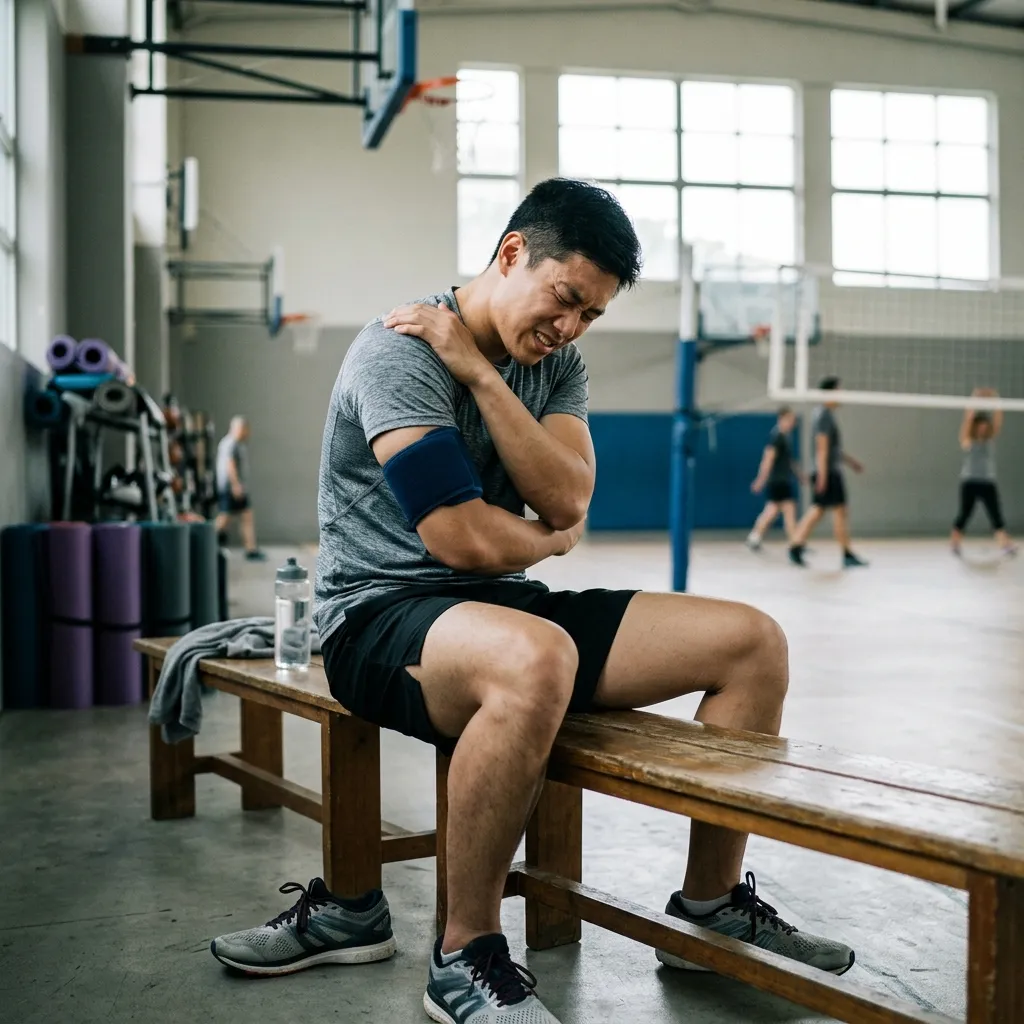
Athletes frequently attempt to push through sharp pain or rely solely on ice packs, leading to chronic compensatory movement faults. Early clinical evaluation identifies tissue damage before microtrauma becomes a chronic injury.
If you have recently had diagnostic ultrasound, hospital X-rays, or an MRI report, please bring them to your consultation for complete correlation with our physical exam.
Book an initial sports assessment at our Cheras clinic. We will test joint stability, isolate involved muscle fibers, review your movement mechanics, and design a structured path back to competition.
WhatsApp Consultation Review Pricing OptionsA successful return to sport depends on understanding both the acute tissue injury and the broader biomechanical factors that created abnormal load distribution.
We analyze the exact vector of force, foot contact, acceleration phase, or bar path during the injury. We evaluate recent changes in training volume, footwear, surface hardness, and recovery schedules.
We assess dynamic movement patterns including single-leg squats, hop stability, overhead reach, and pelvic tilt. Often, an acute knee or shoulder complaint is driven by ankle stiffness or thoracic spine hypomobility.
We perform hands-on stress tests for ligament laxity (anterior drawer, valgus stress, apprehension tests), manual muscle testing for neuromuscular inhibition, and precise palpation for muscle tears and trigger points.
We construct a tailored, phase-based program that progresses from initial pain relief and swelling management into isometric loading, eccentric strengthening, plyometric absorption, and sport-specific return drills.
Outdated practices such as prolonged immobilization or excessive anti-inflammatory reliance can weaken repairing collagen fibers and delay true functional recovery.
Modern sports medicine has evolved beyond prolonged ice and complete rest. The PEACE & LOVE framework emphasizes Protection, Elevation, Avoiding anti-inflammatory drugs that blunt healing, Compression, Education, followed by progressive Loading, Vascularization, and Exercise.
Most acute muscle pulls and mild ligament sprains can be triaged clinically without immediate scans. However, when we suspect complete tendon rupture, avulsion fractures, or internal joint derangement, we promptly refer for targeted ultrasound or hospital MRI.
Injured tendons and muscles require mechanical tension to remodel strong, parallel collagen matrix fibers. Complete passive rest reduces tissue capacity, making the athlete vulnerable to re-injury the moment full competition speed resumes.
If you are looking for sports injury care and performance reconditioning in Cheras, you deserve complete upfront clarity on visit costs.
We do not lock athletes into aggressive 30 to 50 session contracts or push unnecessary procedures. You receive honest clinical evaluation and pay per session as your recovery progresses.
Comprehensive orthopedic assessment and kinetic chain analysis to identify the root cause of your sports injury and load intolerance.
From high-impact field sports to barbell strength training and endurance running, we evaluate the unique biomechanical stressors behind each injury presentation.
Micro-tears in hamstring, groin (adductor), calf, or quadriceps fibers caused by rapid acceleration, overstriding, or high-velocity kicking demands.
Inversion ankle rolls injuring the ATFL/CFL, and knee collateral ligament sprains (MCL/LCL) requiring joint stability restoration and proprioceptive retraining.
Patellar tendinopathy (jumper's knee), Achilles tendinopathy, and rotator cuff tendon overload where structural collagen breakdown requires heavy-slow resistance training.
Lumbar shear forces from squat butt-winks, pelvic shifting during deadlifts, and bench press shoulder impingement evaluated through lifting bar path mechanics.
Badminton, tennis, and swimming shoulder deceleration fatigue coupled with restricted thoracic spine rotation, causing posterior capsule pinching.
Medial tibial stress syndrome (shin splints), Iliotibial band (ITB) friction syndrome, and plantar fascia load accumulation caused by cadence and foot strike imbalances.
Dense muscular adhesions in the glutes, deep rotators, traps, and calves that restrict full joint excursion and respond rapidly to clinical trigger point dry needling.
Objective limb symmetry index (LSI) testing, single-leg triple hop tests, and sport-specific cutting drills before safe clearance for match play.
We combine chiropractic spinal and extremity adjustments, dry needling, and active loading progressions to rebuild tissue capacity while maintaining transparent medical boundaries.
Targeted adjustments to the spine, sacroiliac joints, feet, knees, and shoulders restore full joint articulation and eliminate compensatory stiffness across the kinetic chain.
Fine, sterile filiform needles release taut muscular bands and deep trigger points in overloaded muscles, instantly restoring resting muscle length and relieving tendon strain.
Targeted isometric holds, heavy-slow resistance, and plyometric drills progressively reload recovering tissues to surpass pre-injury performance capacity.
Authentic feedback from runners, lifters, and active individuals in Cheras and KL who got back to training pain-free.
nur syahidah
"The chiropractor made it easier for the first visit. He's also knowledgeable in sports so every treatment was made to ensure an injury free training in the future."
Wing Hang Yap
"Ian relieved my lower back pain and upper back soreness. Haven't felt this relief for about 2 years already. My previous chiro would only give temporary relief and tell me to stop power lifting. Ian recommended small workouts before my regular workouts to prevent compression pains."

Darren
"Dr Ian is very knowledgeable and patient... he gave me lots of good advice on workout habits and post workout stretches which helped me recover quickly. Highly recommended!"

Mr Ian
"I've been seeing Ian the Chiro on and off for the last few years. Very impressed with the time he takes to understand your full history... He fixed a long term issue from an old injury during my first few visits. His new location in Cheras is also very convenient, with easy parking."
Evidence-based answers to common questions about athletic recovery, training modifications, and treatment modalities.
Modern sports medicine guidelines recommend avoiding excessive ice during the first 48 hours of an acute strain or sprain. While ice numbs acute pain temporarily, it causes vasoconstriction that delays the delivery of essential inflammatory growth factors and cellular waste removal required for tissue repair. Light compression, gentle elevation, and pain-free active movement are preferable. Heat is beneficial later for chronic muscular tightness and tendon warm-ups before training.
In the vast majority of cases, yes! Complete rest is rarely the best answer and often causes cardiovascular and muscular deconditioning. During your assessment, we establish clear "training modifications." For example, if you have a shoulder impingement, we may modify pressing angles, substitute neutral-grip dumbbells, or focus temporarily on lower-body strength and core stability while treating the shoulder.
When muscles undergo intense repetitive stress, localized sarcomeres lock into painful contracted knots known as myofascial trigger points. These restrict blood flow and create persistent tension on attached tendons. Dry needling uses ultra-thin, sterile acupuncture needles to target these points directly, triggering a local twitch response that instantly resets muscle tone, restores tissue extensibility, and decreases tendon strain.
Hamstring strains have one of the highest recurrence rates in sports (up to 30%). This is usually caused by returning to sprinting too early when the scar tissue lacks tensile strength, paired with residual gluteal inhibition and poor eccentric hamstring capacity. We prevent recurrence by retraining eccentric deceleration strength (such as Nordic hamstring curls), restoring sacroiliac joint mobility, and ensuring sprint deceleration mechanics are sound.
Chiropractic adjustments restore natural motion to restricted spinal segments and extremity joints. When a joint is mechanically restricted (such as the thoracic spine or ankle talocrural joint), surrounding musculature inhibits and neighboring joints are forced to compensate under heavy athletic loads. Restoring normal joint mechanics improves proprioceptive feedback, optimizes neuromuscular recruitment, and enhances explosive power transfer.
No, an MRI is not required prior to your first consultation. A comprehensive clinical history, orthopedic joint stability testing, and functional movement screen accurately diagnose the majority of sports injuries. If during testing we suspect structural issues requiring imaging (such as an ACL tear, labral detachment, or bone stress injury), we will refer you directly for an imaging scan.
The term "tendinitis" implies active inflammatory cell infiltration, which research shows is only present in brief, acute stages. Most persistent athletic tendon conditions (patellar, Achilles, tennis elbow) are actually "tendinopathies" characterized by non-inflammatory collagen disorganization and decreased load tolerance. Because there is minimal active inflammation, anti-inflammatory medications and rest alone fail; the tendon requires progressive mechanical load to rebuild.
We do not rely on subjective pain levels alone, as pain often disappears well before tissue strength and neuromuscular coordination are fully restored. We utilize objective criteria including: (1) full, pain-free active range of motion; (2) at least 90% limb symmetry in strength testing compared to the uninjured side; (3) successful completion of functional hop tests; and (4) pain-free execution of sport-specific acceleration, deceleration, and cutting drills.
Recovery timelines vary depending on the injured tissue and grade of injury. Mild muscle strains and joint sprains typically show substantial improvement within 3 to 6 sessions over 2 to 4 weeks. Chronic tendinopathies and complex biomechanical faults generally require 6 to 10 sessions spaced over 6 to 12 weeks to allow for tissue remodeling and progressive load adaptation.
You should seek immediate emergency hospital medical evaluation if you experience any of the following critical red flags:
These presentations represent acute medical emergencies requiring immediate hospital surgical or orthopedic trauma review rather than outpatient clinic care.
Have a specific question regarding your athletic injury or training regime?
Ask via WhatsAppDo not let lingering aches, muscle tightness, or re-injury fears compromise your athletic potential. Get an accurate diagnosis, targeted manual therapy, and an active path back to peak performance.